Metals Procurement

$6.9 million in documented savings for a high-volume aluminum casting facility

The plant needed a reliable, cost-efficient secondary aluminum supply. Building the operation to source it internally was never going to pencil. Outlast took over sourcing, chemistry verification, processing to spec, and logistics end-to-end. We were paid out of the savings we produced.

share
link copied to clipboard!
Documented outcomes
$6.9m documented savings, inclusive of all fees
34–36% savings vs. industry benchmark pricing
70%+ direct opex reduction projected at full-volume scale

The material was available. The operation to capture it wasn't.

Secondary aluminum is not a scarce commodity. Getting it into a high-volume casting facility at the right chemistry and the right price is a different problem. It's not just a procurement problem, it's an operating problem that requires expertise.

Sourcing qualified material, sampling its chemistry, processing it to a blending specification, warehousing it, and moving it are five distinct disciplines. Each requires its own expertise, its own systems, and its own working capital. A casting plant is built to cast. Standing up a commodities operation from zero to serve a single input line was operationally unjustifiable, the headcount and market knowledge required could not be recovered against the volume of one facility.

What the plant was up against:

  • Scrap prices move daily by alloy, geography, and chemistry, with no real-time visibility into what any given load should cost

  • Material quality has to be verified before it can be priced, and verification requires sampling infrastructure.

  • Meeting a casting spec by purchasing to that spec means paying a premium for grade that blending could have produced more cheaply.

  • Warehousing, logistics, and quality control sit with different intermediaries, each extracting margin.

  • No turnkey pathway exists between a generator's material and a plant's specification.
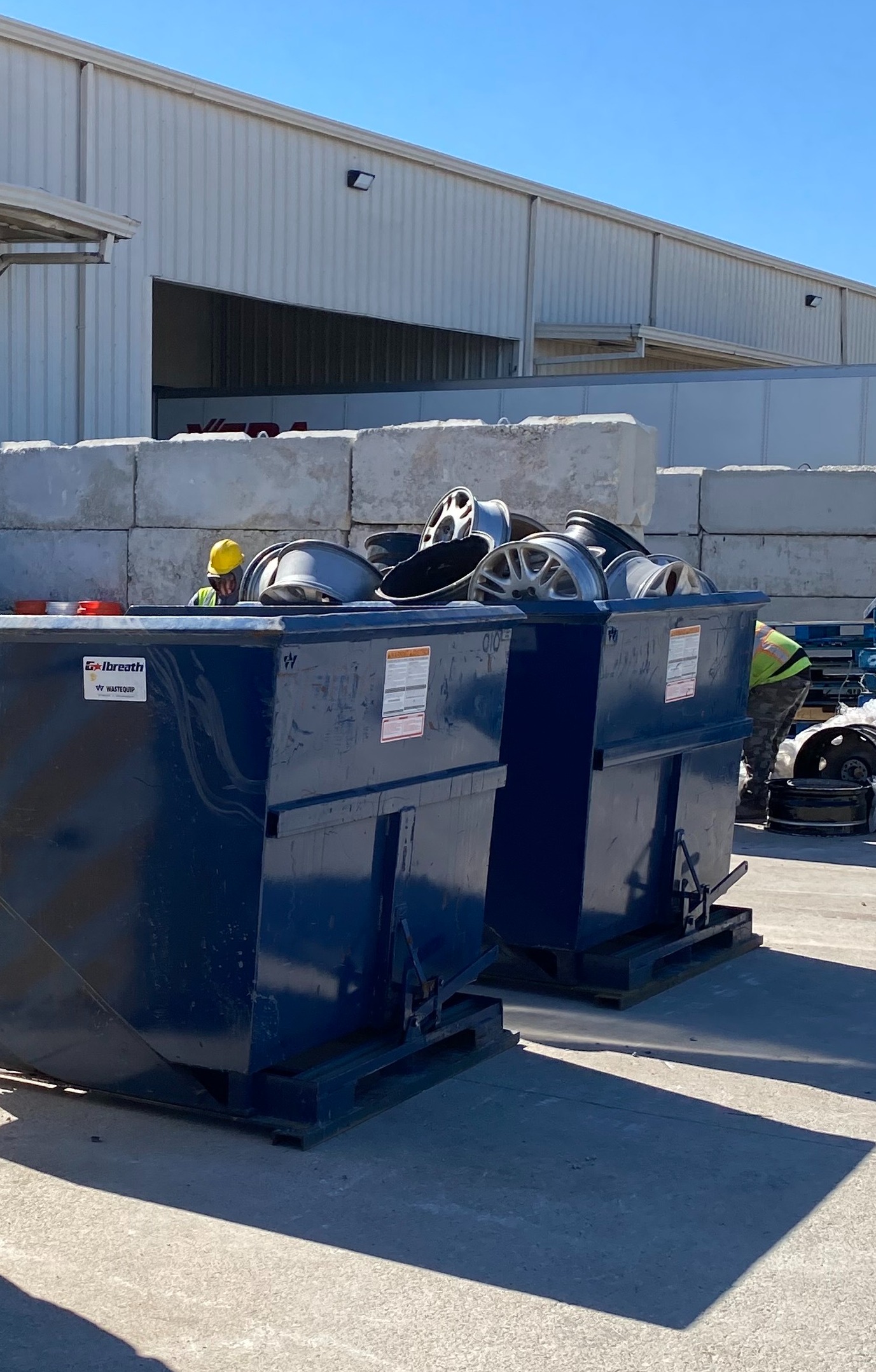
$8-13M: Projected annual savings at target volumes. The engagement runs three years under a success-fee-aligned PPA.
At full contracted volume, projected annual savings reach $8-13 million.

What Outlast took over

Outlast became the facility's metals procurement & integrated commodities manager. Not a broker in the chain, but the operator of the entire chain, from generator to plant floor.

Blending to spec instead of buying to spec

The largest single source of savings was blend optimization. Outlast's proprietary models design the lowest-cost material recipe that still satisfies the casting specification, drawing on verified chemistry from across the supplier network. The practical effect: the plant stops paying a premium for grade it doesn't need. Material is engineered up to spec rather than purchased at spec.

Paid out of the savings produced

The engagement runs as a multi-year partnership under a success-fee-aligned PPA. Outlast's compensation is a function of the value it creates, which means the $6.9 million above is net documented savings inclusive of all fees. Outlast only wins when the customer wins.

The engagement, step by step

  1. Procurement & supplier management: sourcing and qualifying generators across the Outlast network rather than relying on the incumbent brokers within reach of the plant.

  2. Chemistry sampling: verifying what each load actually is before it is priced, so quality and price are connected.

  3. Material upgrading: bringing lower-grade input up to required chemistry rather than sourcing material that already meets it.

  4. End-to-end logistics: movement from generator to plant managed as a single process, with no coordination burden retained by the customer.

  5. Easy invoicing & reporting: invoices are generated automatically and reporting is customized to the customers needs.

more case studies

How one manufacturer 3x'd revenue on the same aluminum scrap — without changing a thing in the plant

Outlast conducted an extensive network survey to match the manufacturer's specific scrap profile to highest-value outlets, implemented transparent cost-plus pricing, and ran containerized logistics end-to-end.

Read More

Global industrial OEM: protecting proprietary technology across the continental US

The OEM was managing dozens of regional destruction vendors across the US for high-value, IP-sensitive end-of-life equipment, with no scalable verification system or auditable proof that destruction had actually been completed.

Read More